Poor Man’s Silver
How Tin Transformed New Mexico

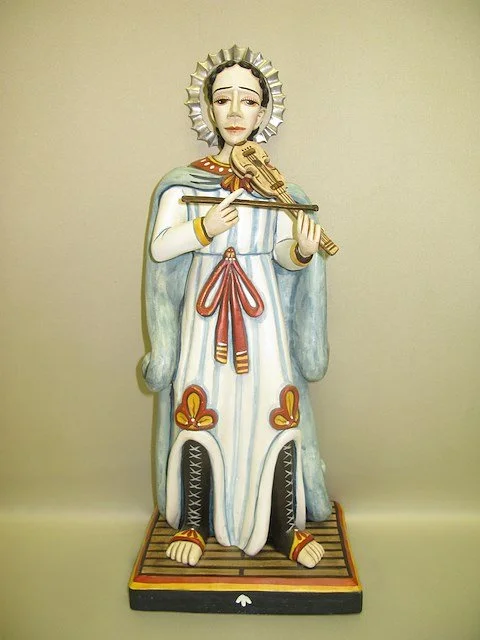
1990 Marie Romero Cash Bartlett Award Adam and Eve Bultos and Tin
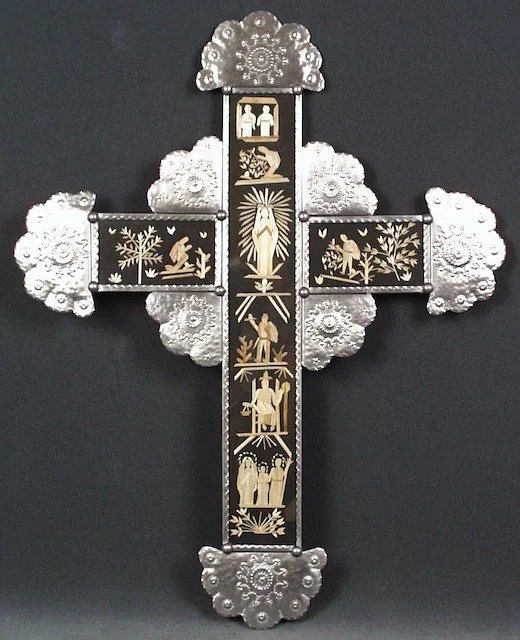
Following Mexico's Independence and the opening of the Santa Fe Trail, the introduction of tin transformed New Mexican art. During the Spanish Colonial Period, strict production restrictions meant tin was largely unavailable, but once supplies started coming in, local tinsmiths got creative. They started using old coffee and lard tins and turning them into crosses, frames, and candle holders.
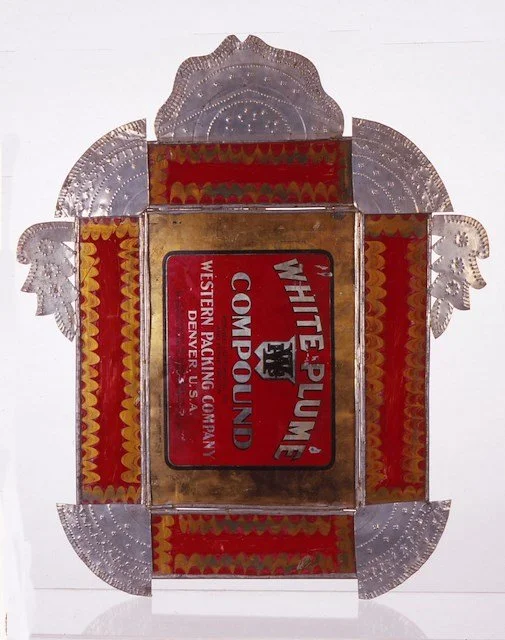
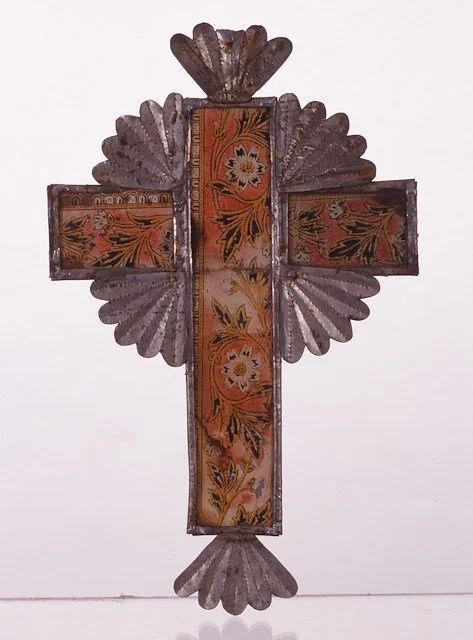
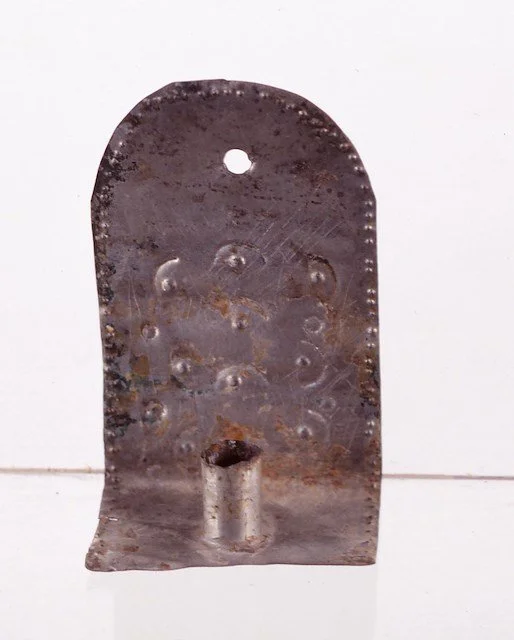
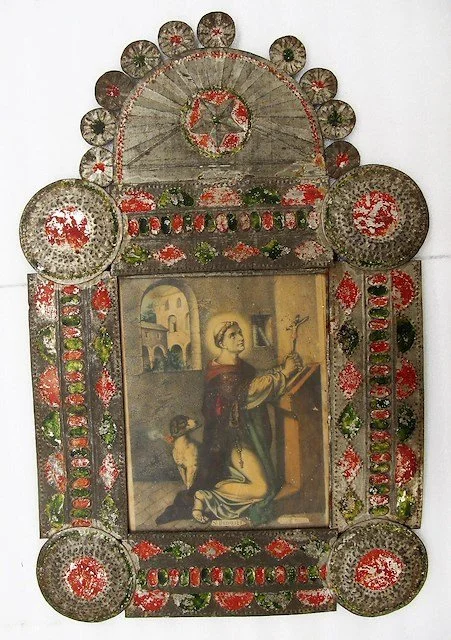
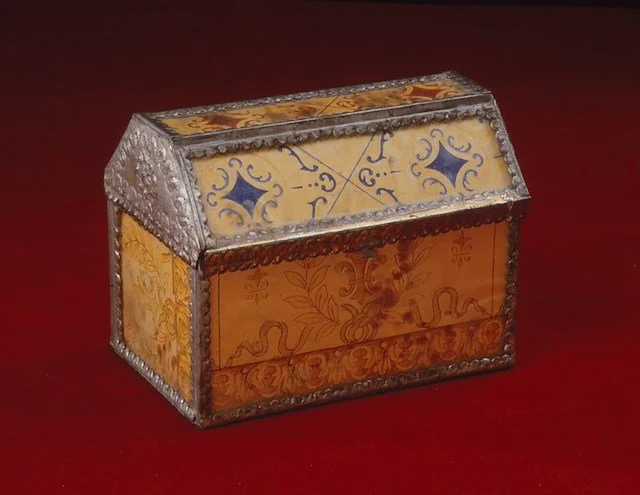
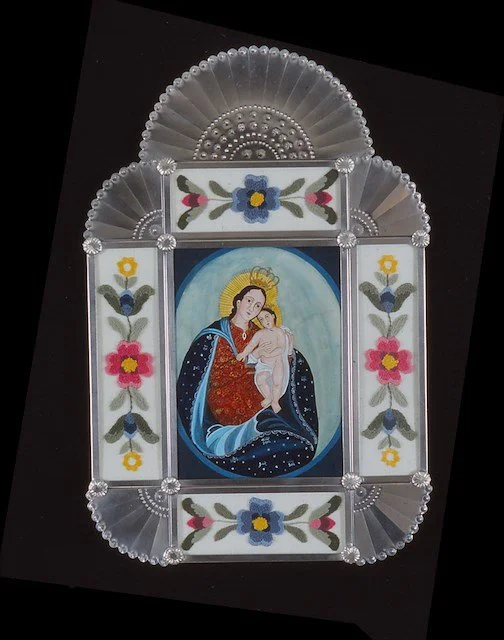
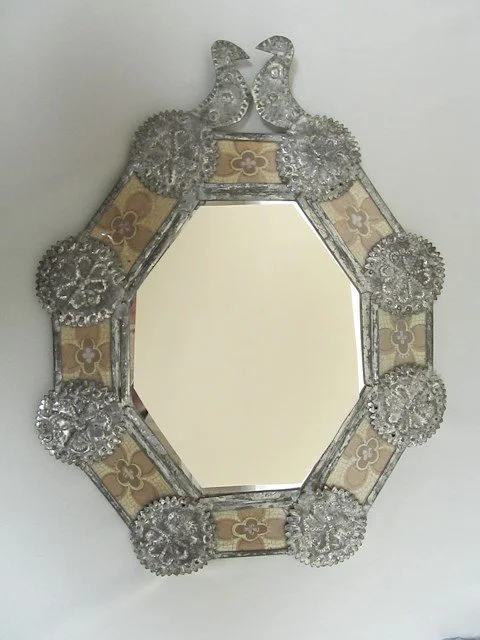
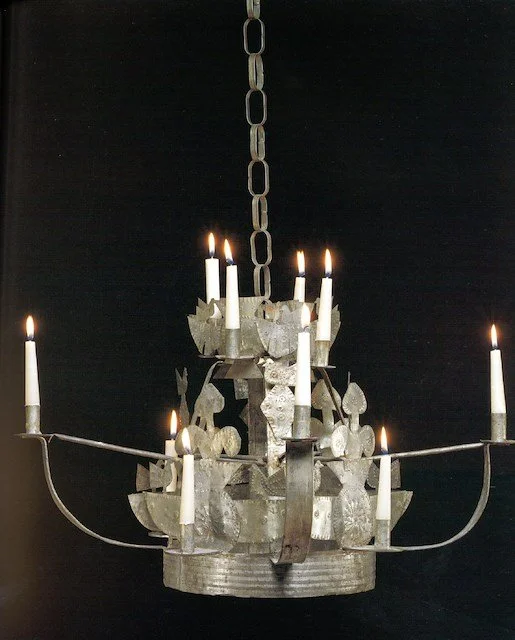
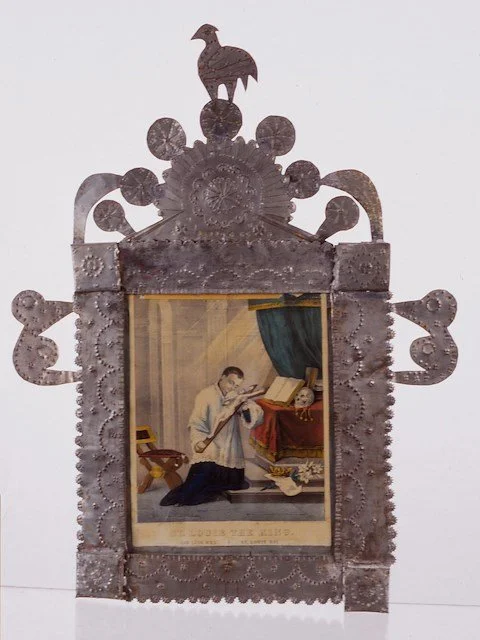
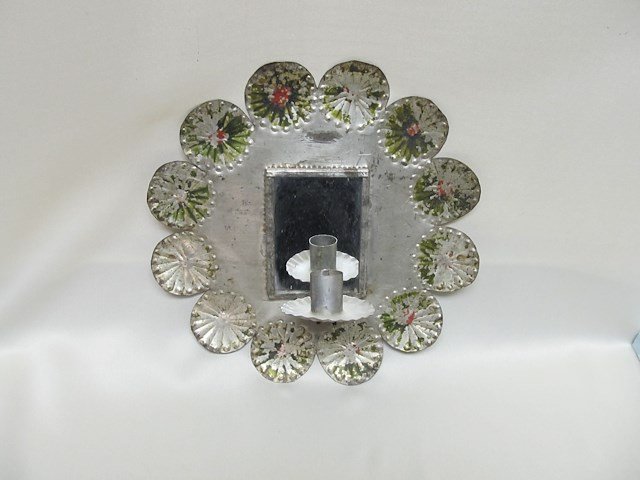
While you could find some tinwork back in the 1700s, the craft really took off in the 1840s and 1850s when tinplate started pouring in from the eastern U.S. Hispanic craftspeople were repurposing the big drums and cans that were used to ship food goods for local merchants and the Army. They used this recycled metal to make all kinds of household items, including lanterns, chandeliers, boxes, wall sconces, and frames for mirrors, family photos, and frames for images of santos.
This tradition continues into the 20th century, evolving even further, with tinsmiths incorporating the metal into furniture and using it to embellish bultos and retablos. What began as a resourceful way to recycle old food cans into religious and domestic essentials blossomed into a sophisticated decorative art form. This enduring tradition serves as a beautiful testament to New Mexican creativity and resilience, continuing to adapt and thrive as a living legacy today.